Project: Exceed
A first person, speedrunning experience
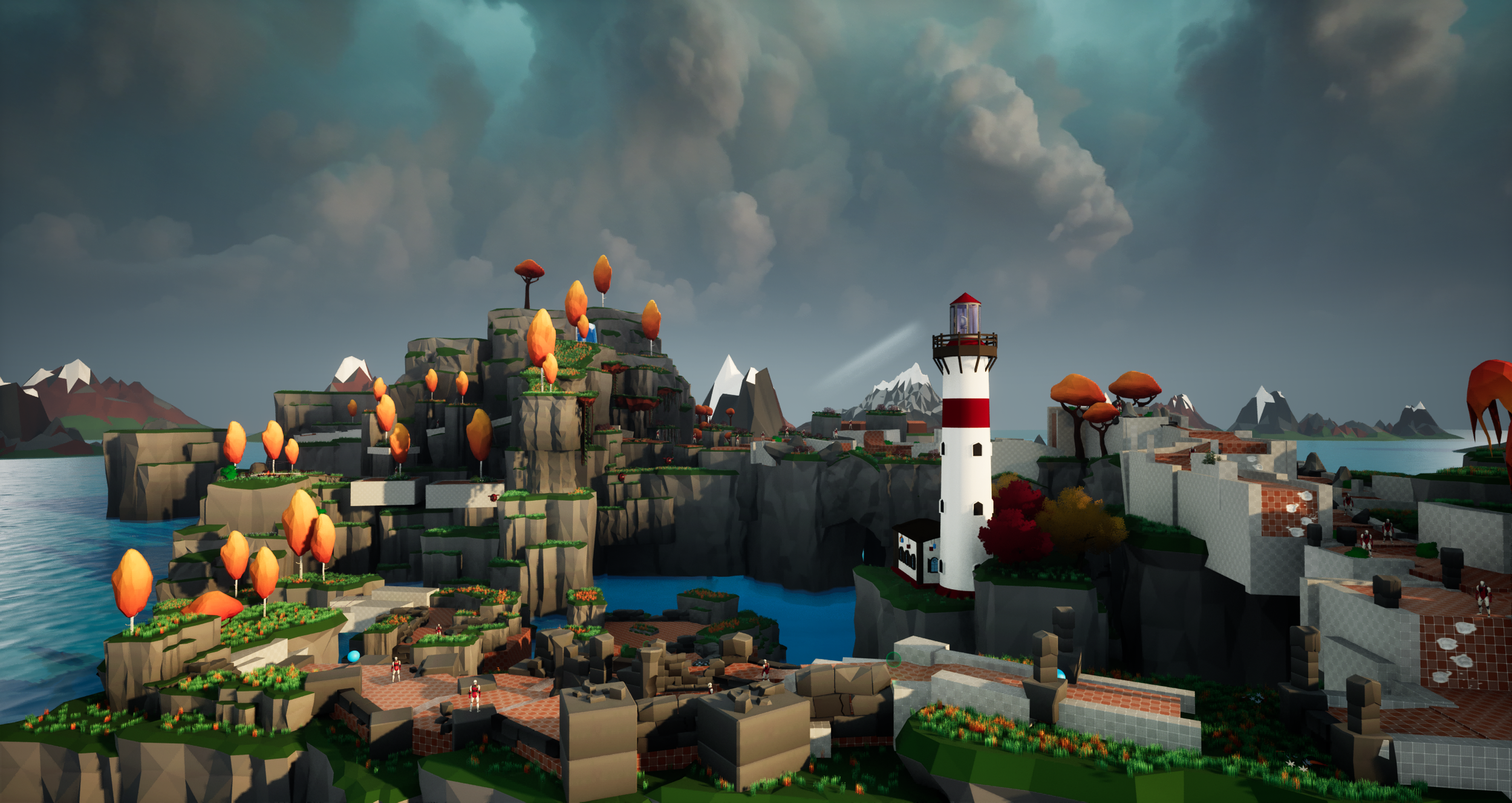
Project Breakdown
Solo - 5 weeks, halftime
Created in Unreal Engine 5
All scripts are created by me
Assets used/collaborations
Blockout Tools plugin by Dimitry Karphukhin
Chaotic Skies by Velarion
Low Poly Nature by Vertex Rage Studio
Lighthouse model by Alva Liljekvist
Animations by Hampus Norman
Gun Model by Alexander Lindberg
Goals
To create a fast and addictive speedrunning experience
Building a toolkit for the player to master
To create a level that puts the player in a flow state
Incentivizing replayability through skill expression
Summary
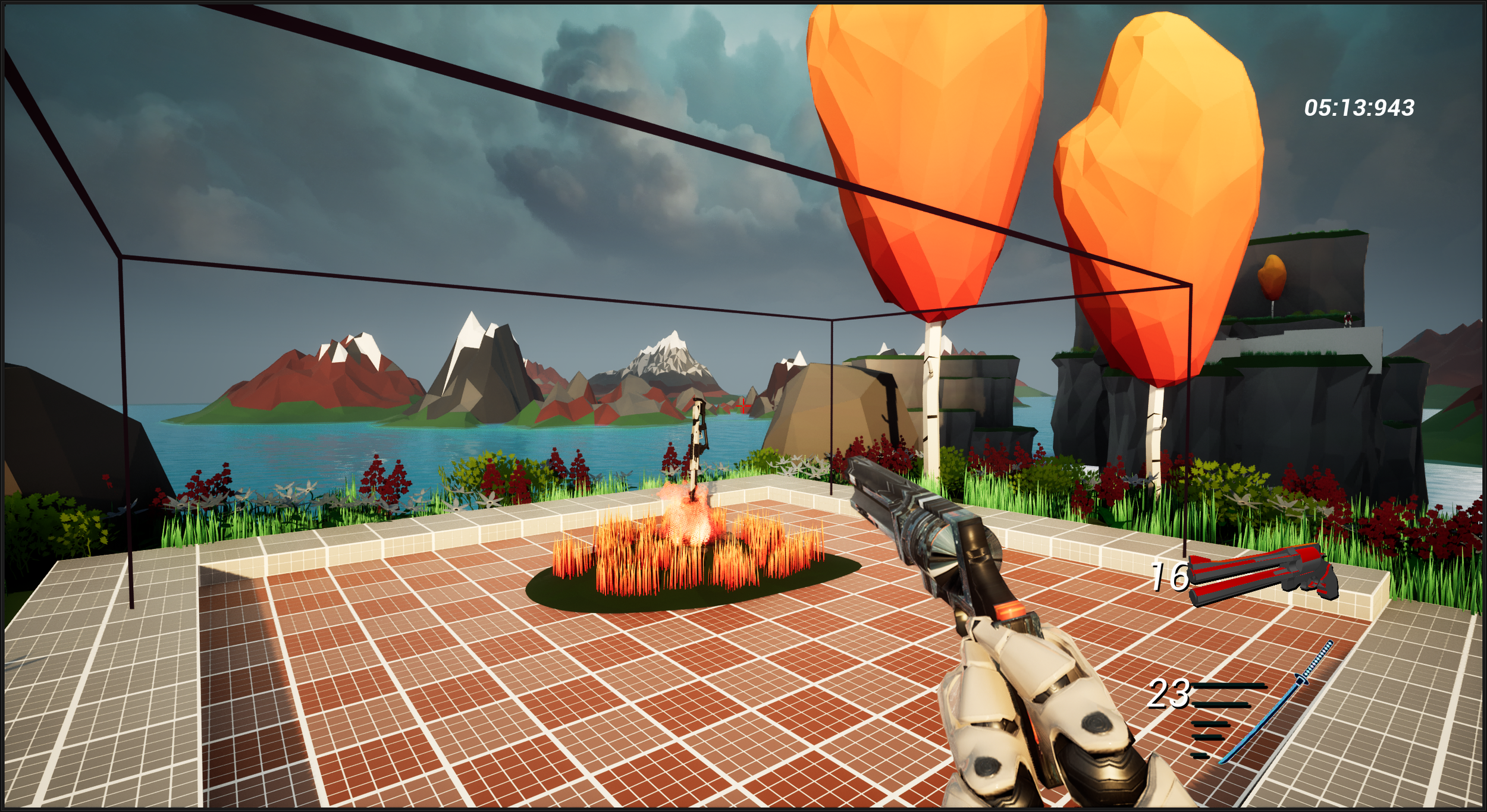
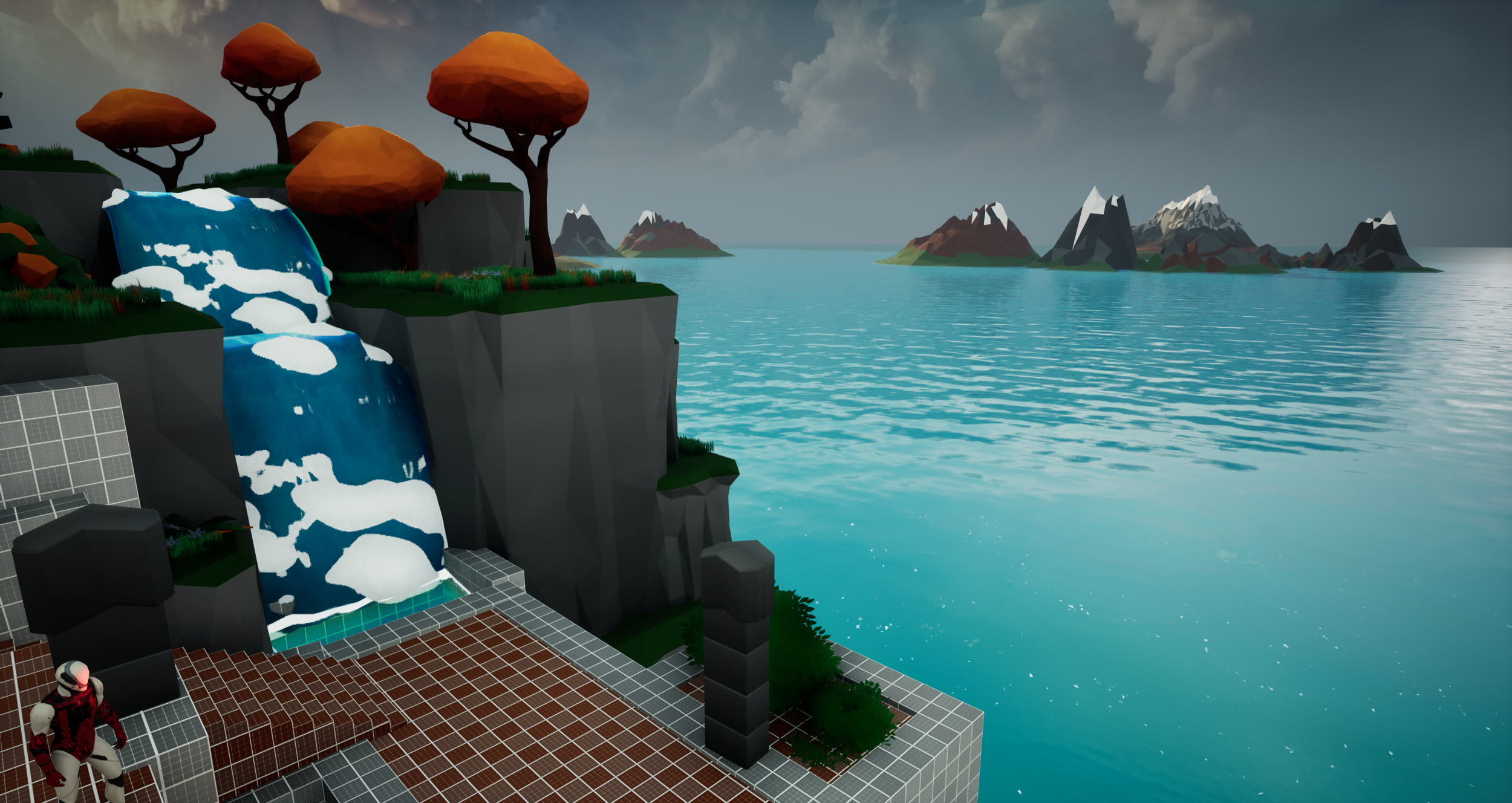
A stylish assassin in training, you’re sent to a gorgeous archipelago in the mediterranean sea. Shoot and slice your way through to the finish line in speed & style, all while setting the perfect score.
The focus of the project is on game & level design primarily, with a secondary focus on scripting and visual feedback.
Noteworthy scripts:
Player controller
Camera oriented dash
Devil May Cry Inspired Style Meter
Randomizing of contextual widgets
Software used
Unreal Engine 5.6
Miro


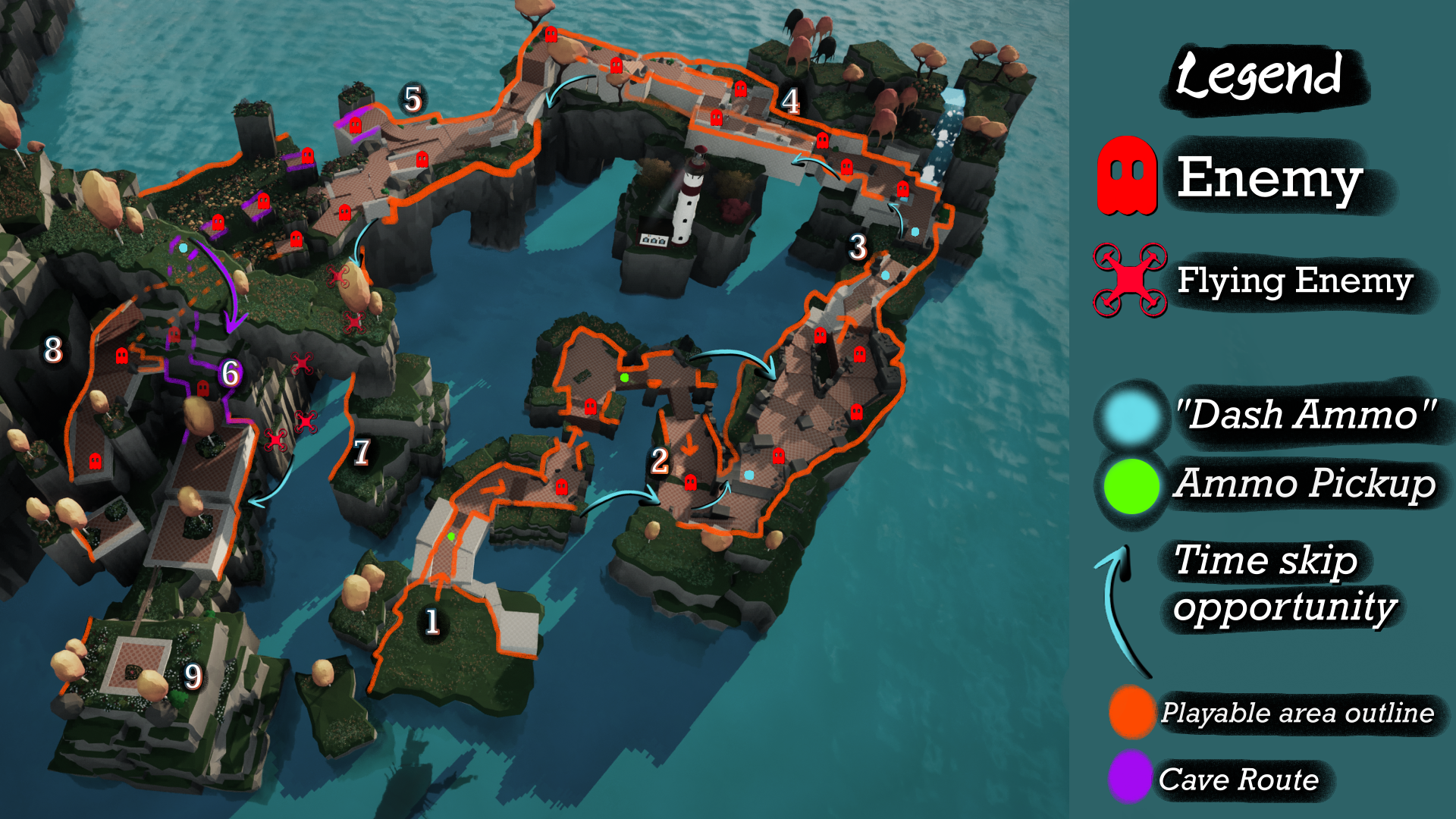
lEVEL OVERVIEW
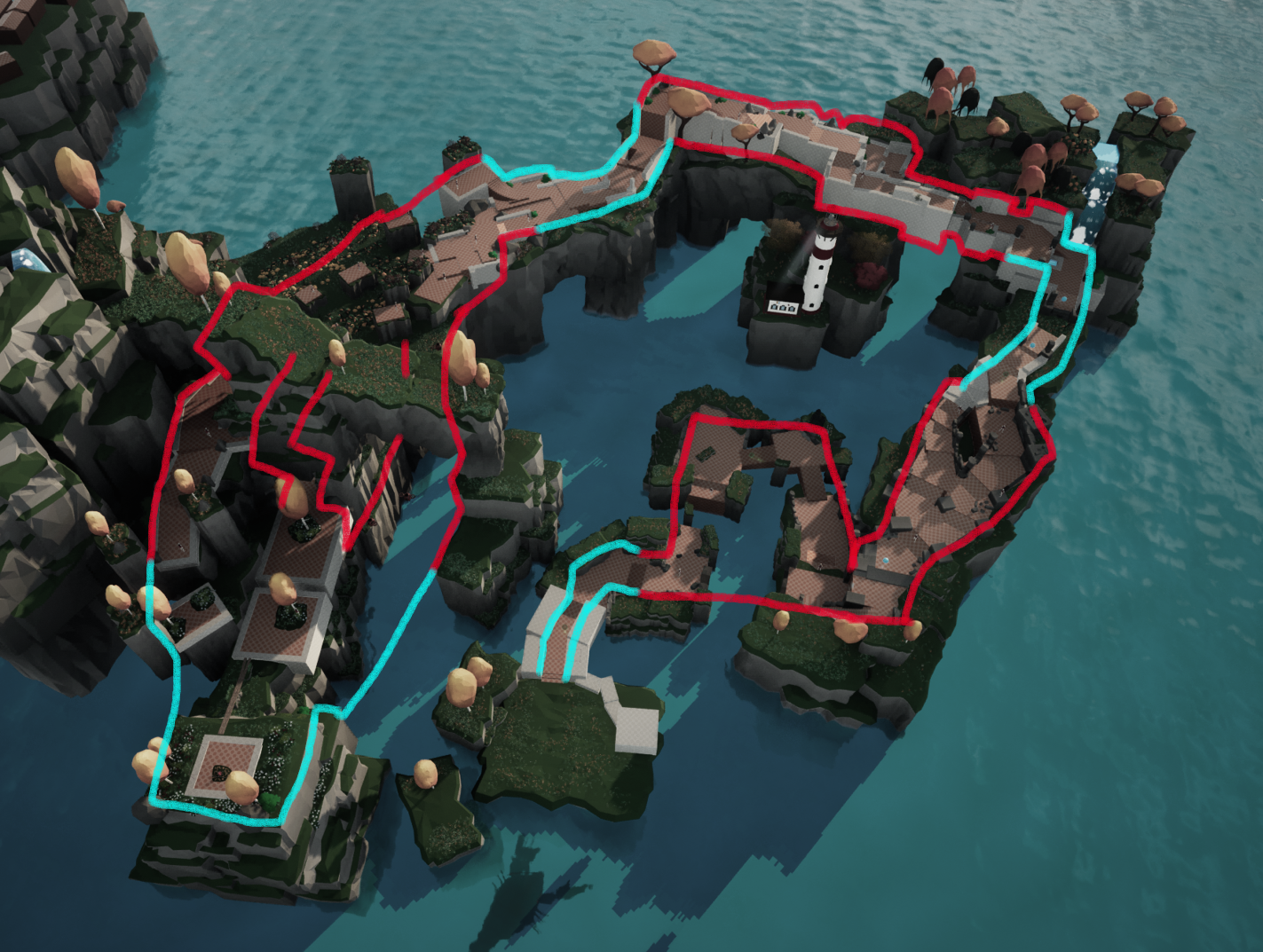
Level Start
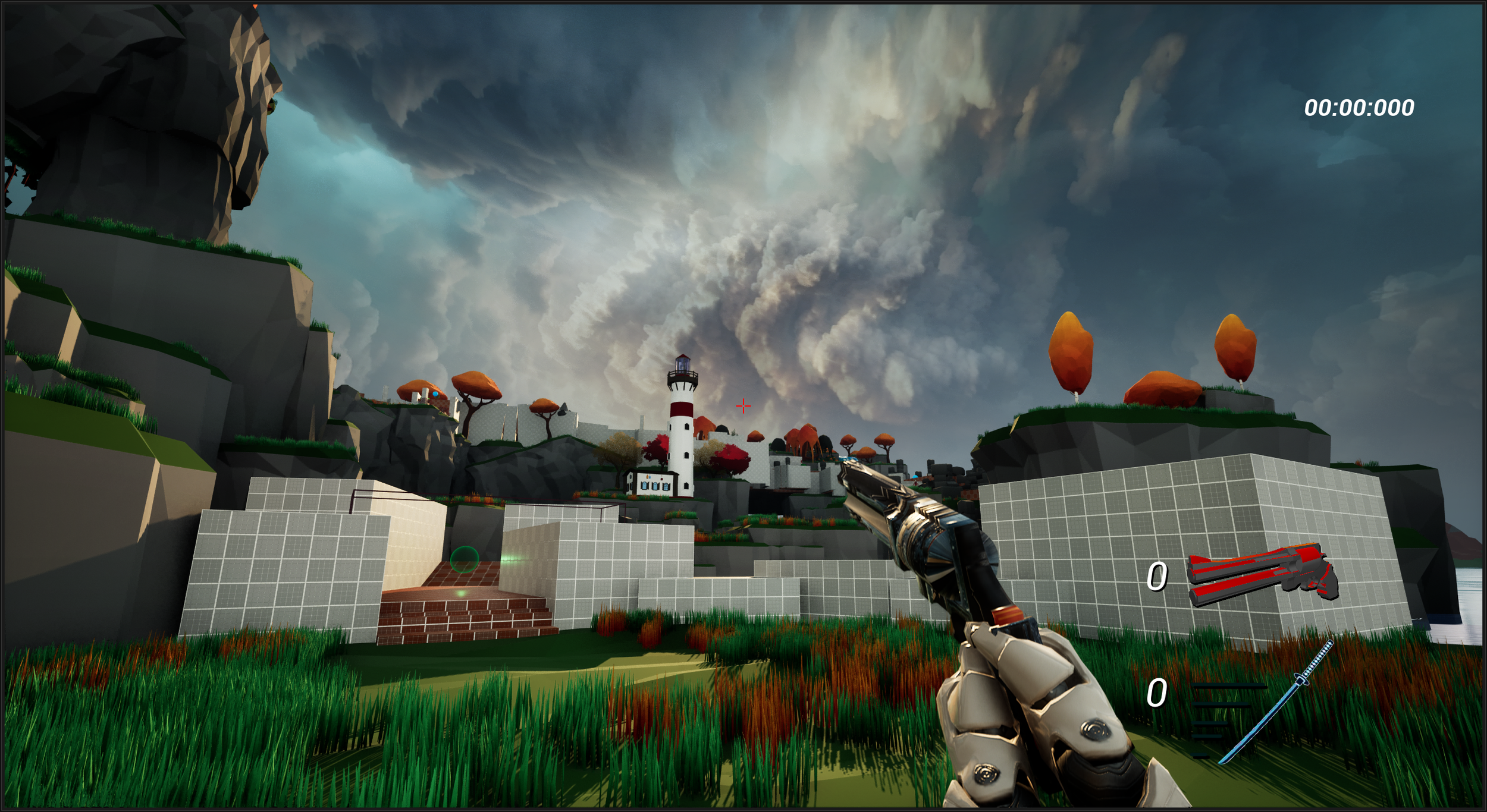
1
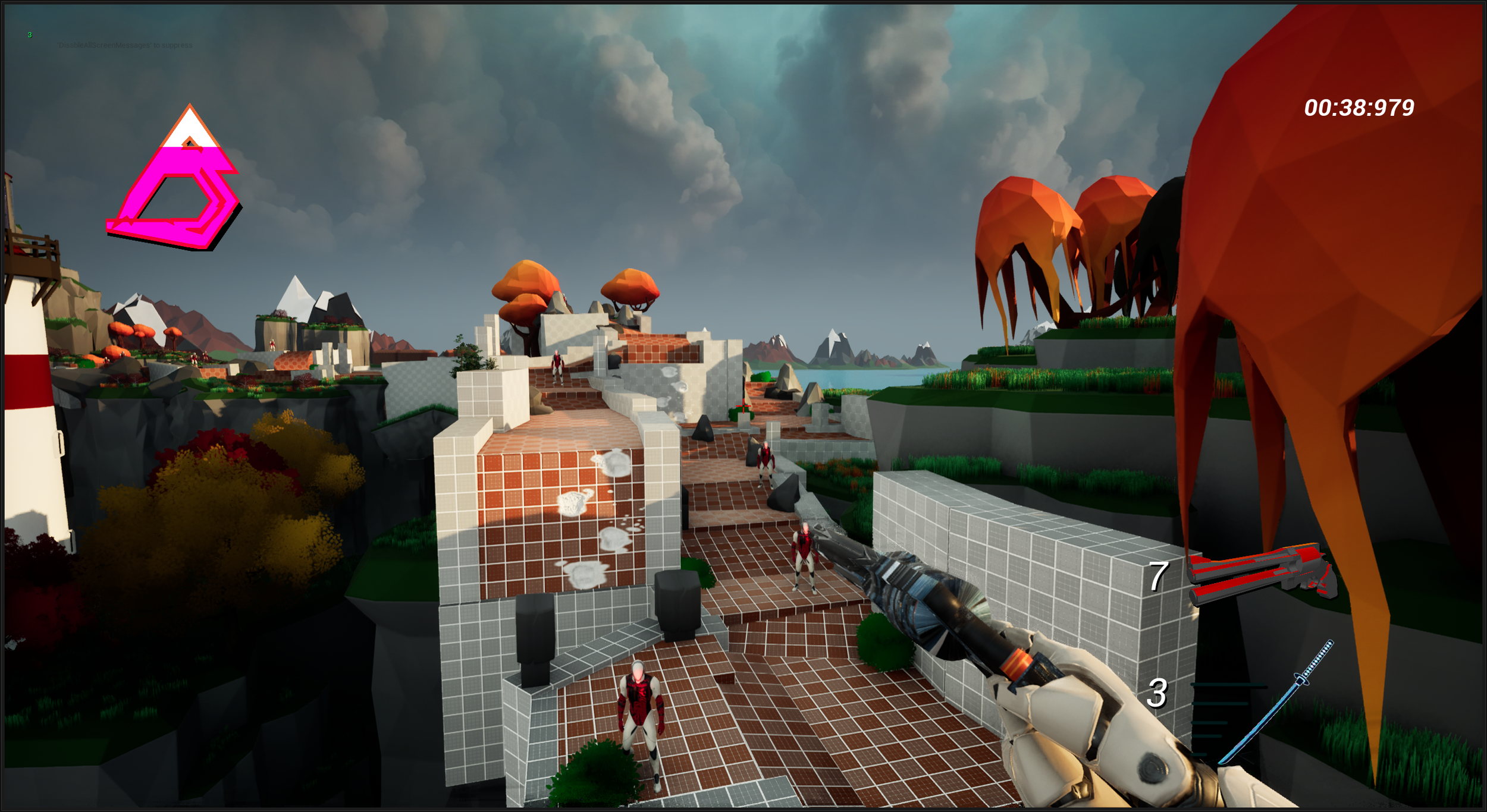
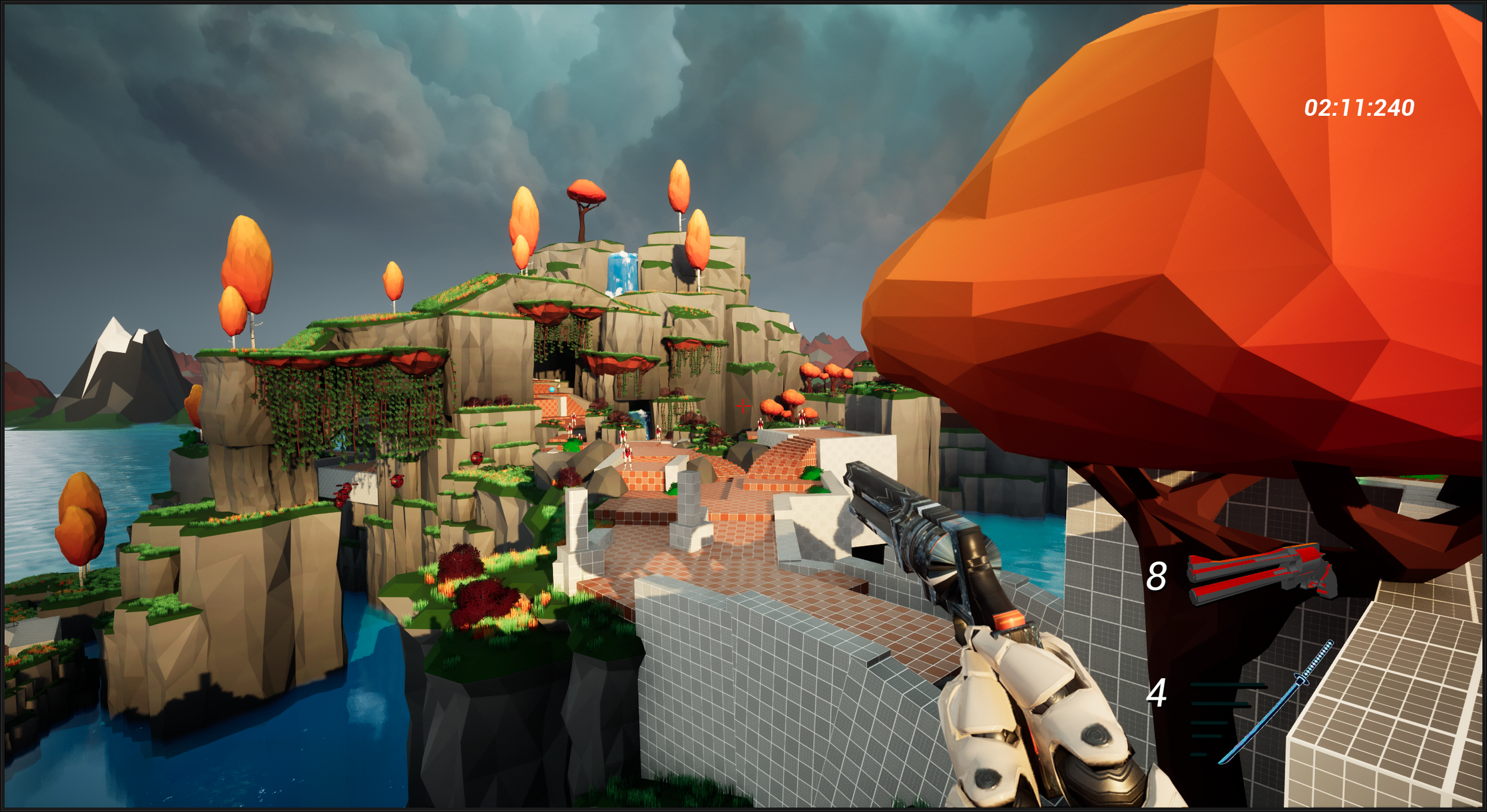

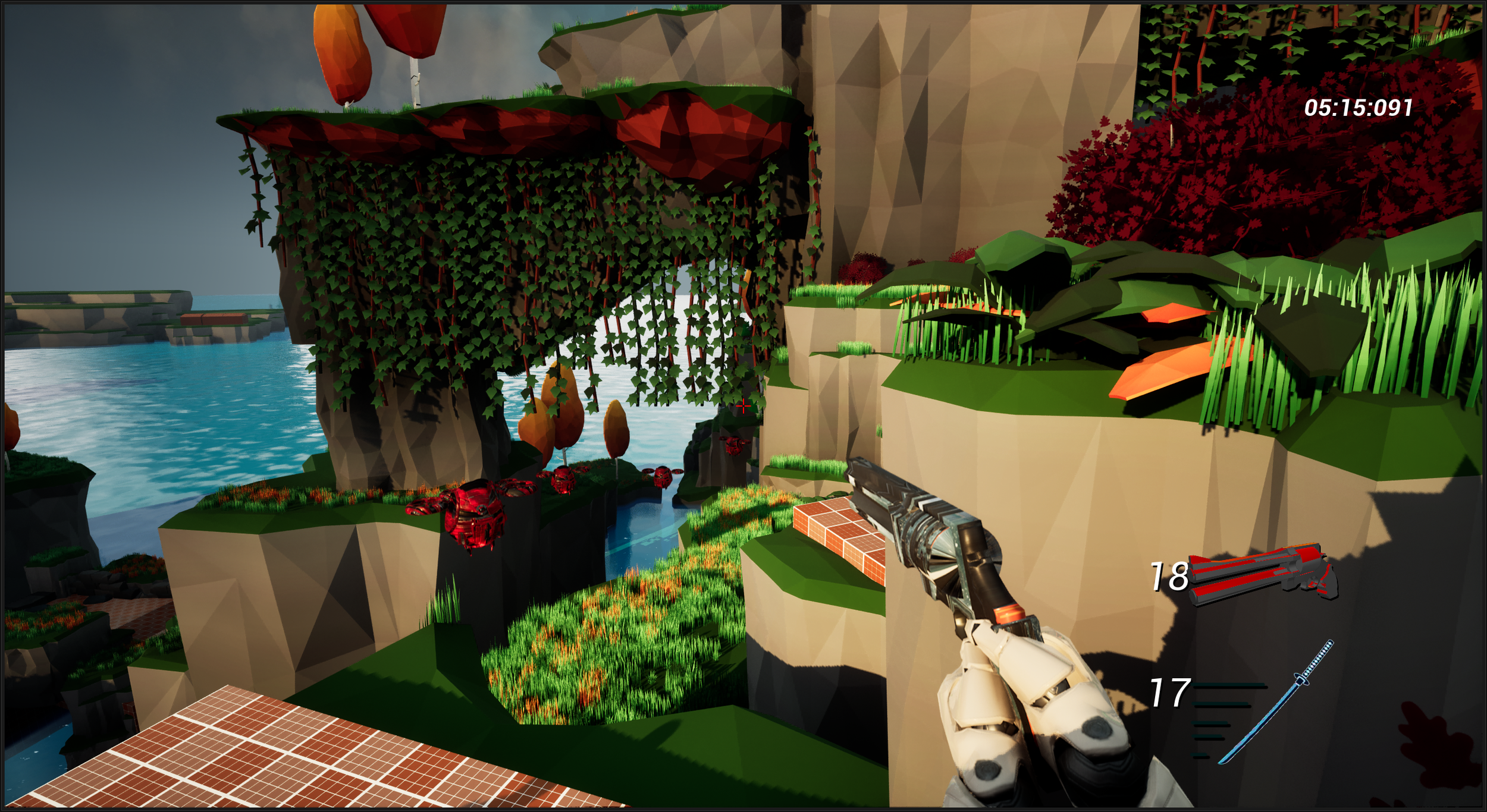
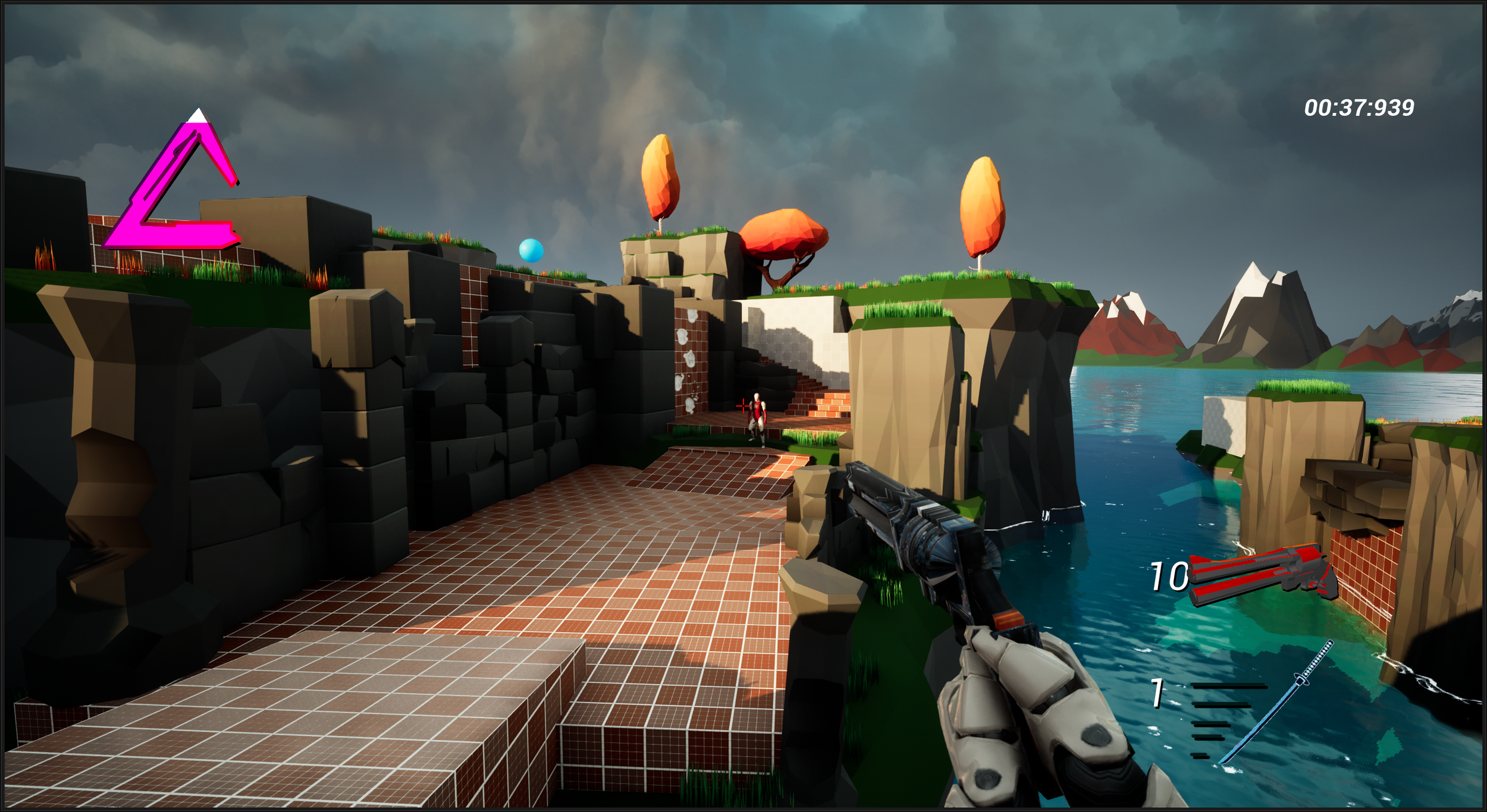
2
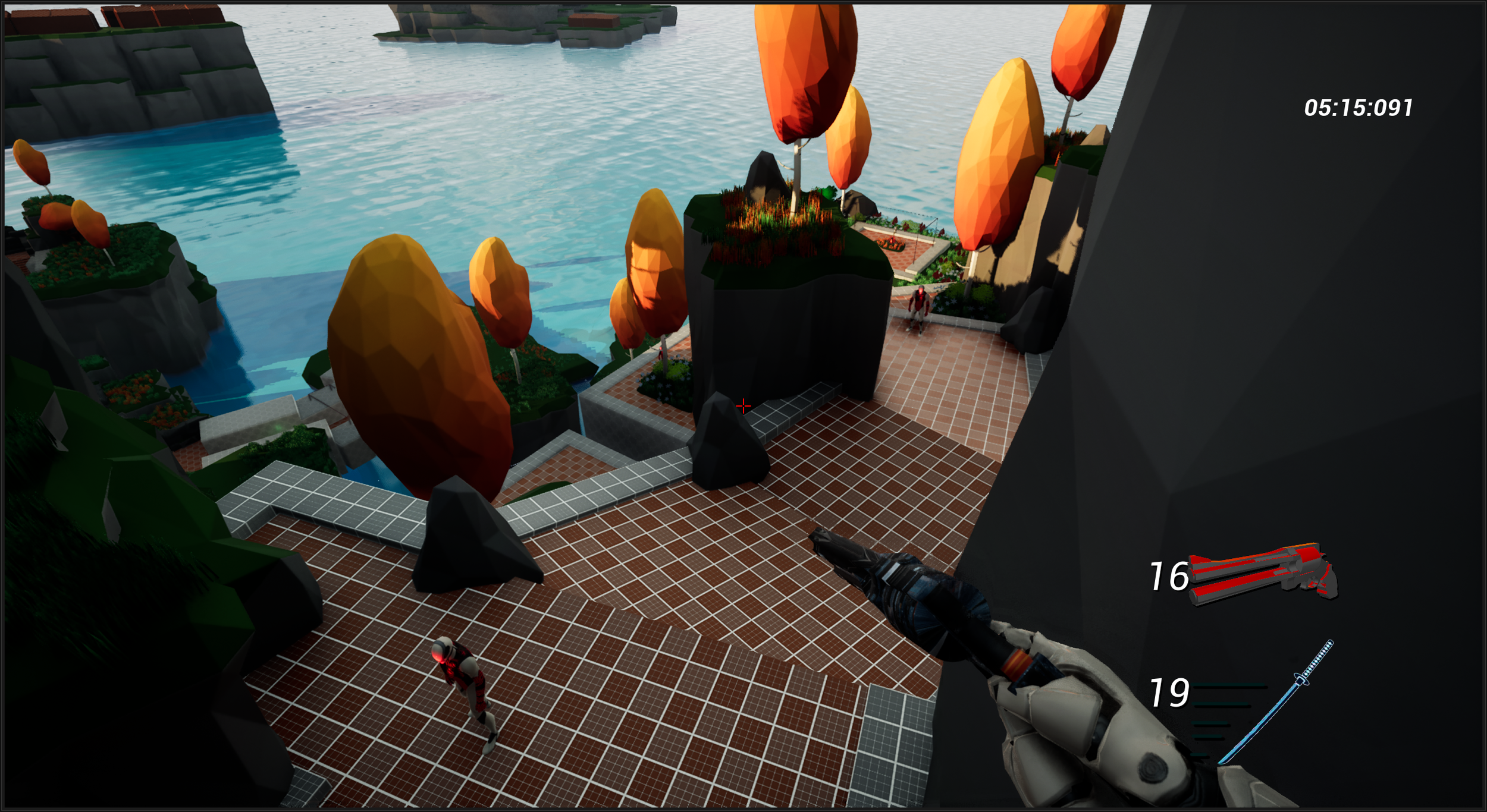

3
Split 1
Split 2 Start
4
5
6
7
8
9
Split 2
Split 3 Start
Cave route
Flying enemy Route
Mountain Arch Route
End
Level design
To pace a speedrunner

Going fast is fun
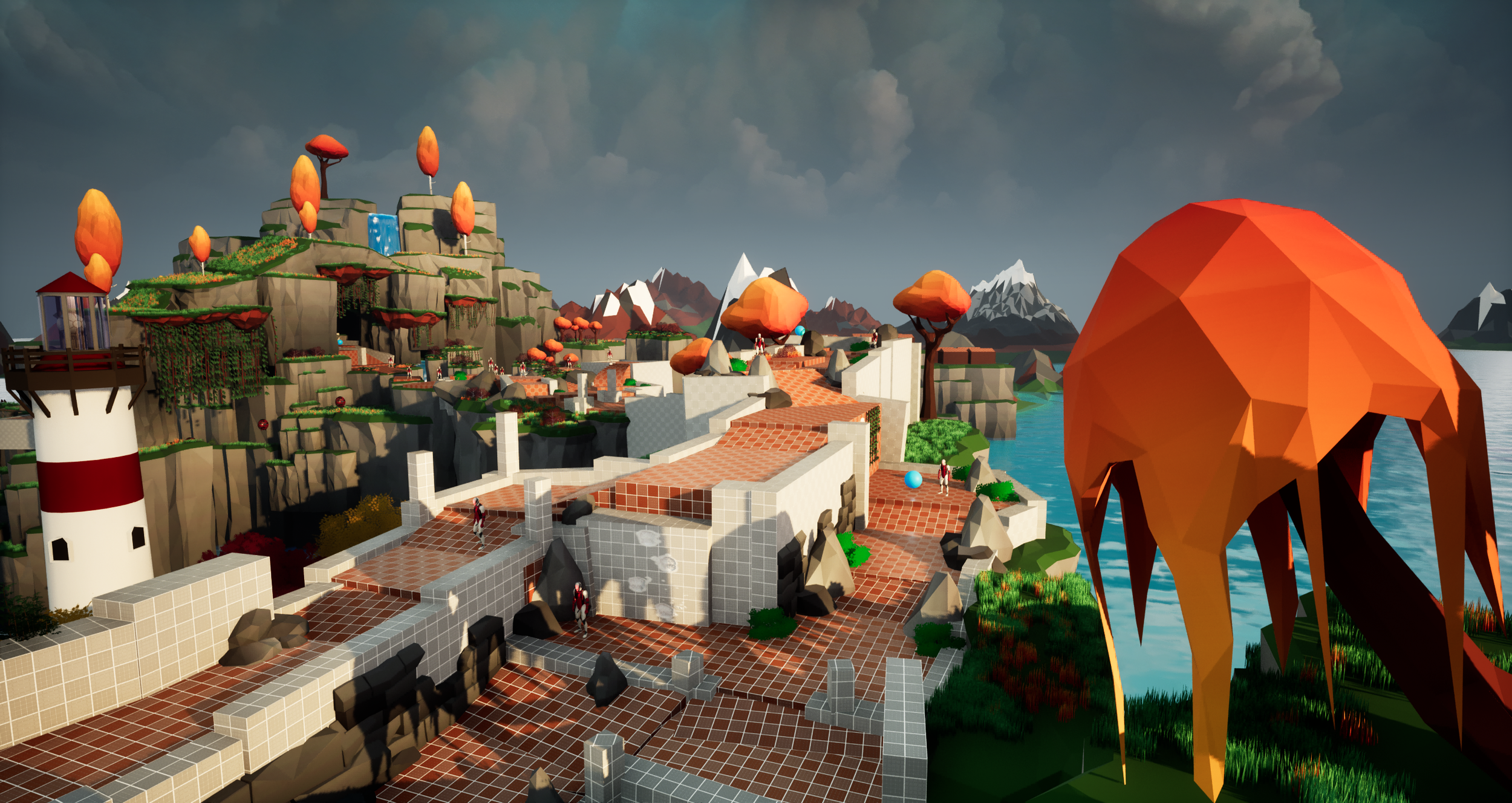
But it can get tiresome if overdone. Letting the player think and breathe in between the action is crucial to ensure they don’t burnout on the experience. The map is deliberately designed for bursts of fun with appropriate decompression zones.
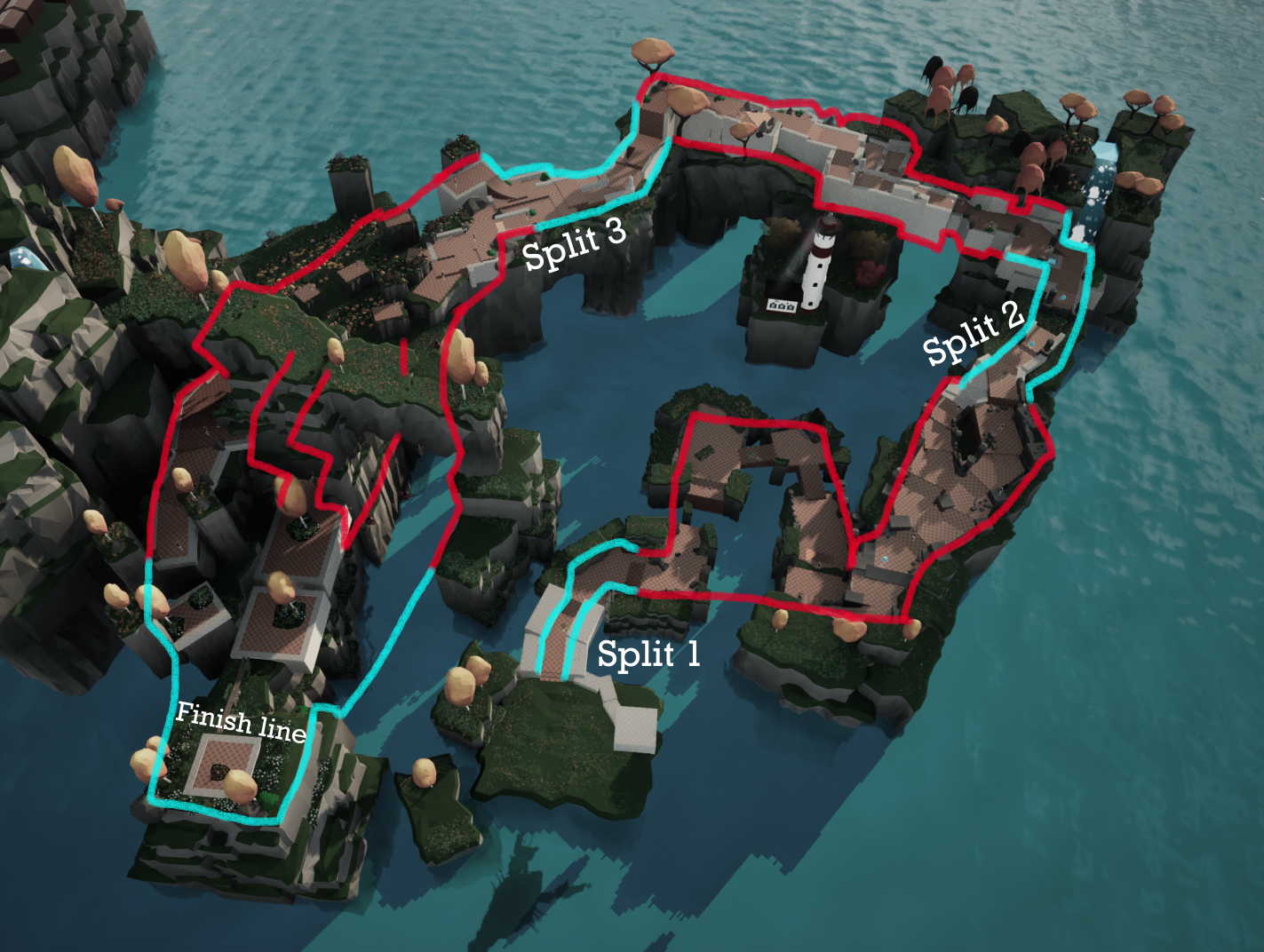
I designed the map with a “3 Split” mentality; what I mean by that is I wanted to make each part of the map distinct in gameplay, and to some extent visuals.
Split 1 is more of a puzzle area, figuring out where to skip to save time. It’s less about mechanical prowess and more about analytical skills on the fly.
Split 2 is the opposite of 1, enemy placements are more dense and quick decisions paired with mechanical skill will determine how fast the player goes through this area.
Split 3 aims to combine both philosophies of 1 and 2. It’s structured in a way where you could make a split second decision that you aren’t happy with in the moment, but if skilled enough, you could easily make up the time loss.
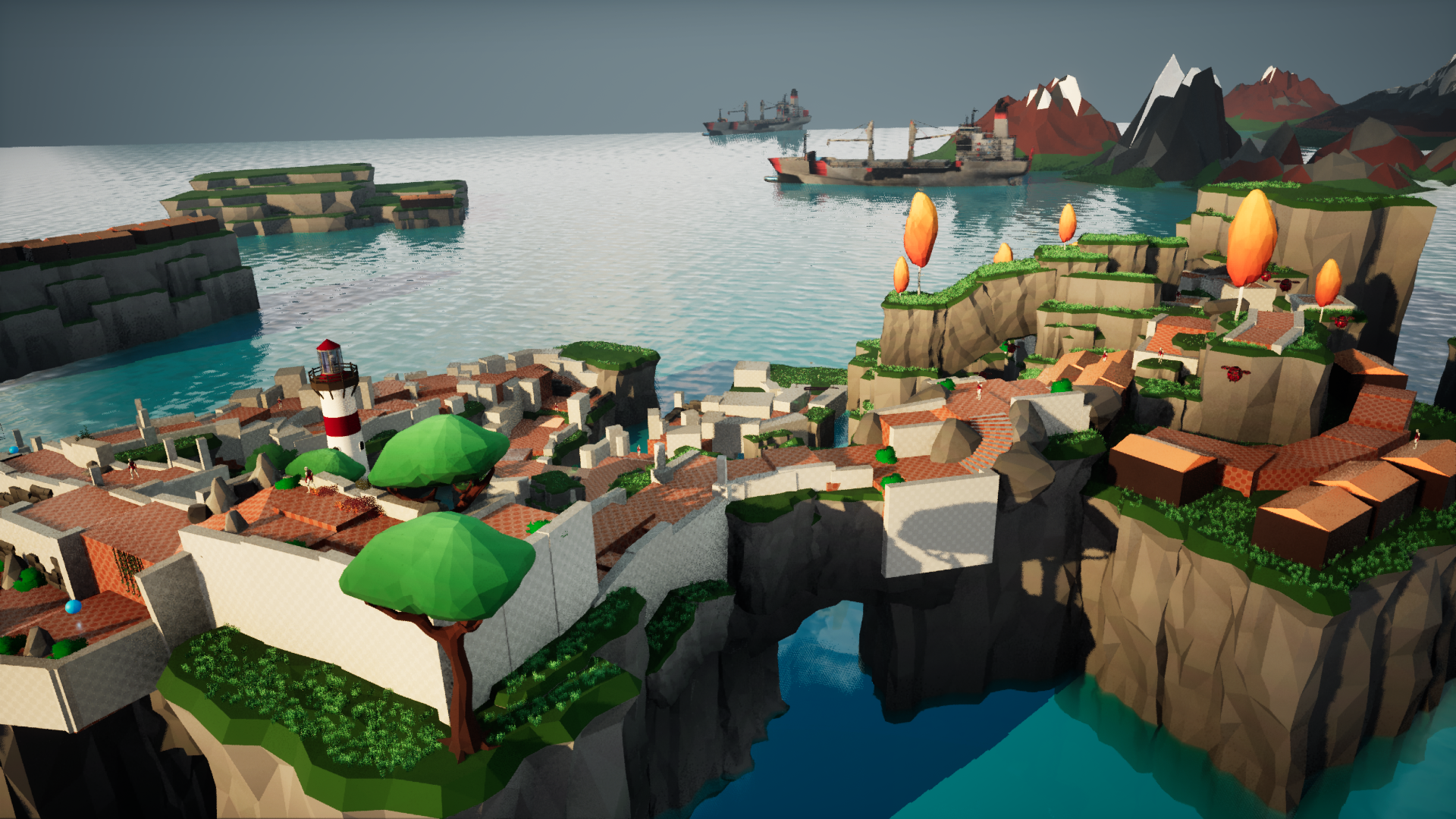
Video where I talk about design choices in an early stage of the level
Pacing overview
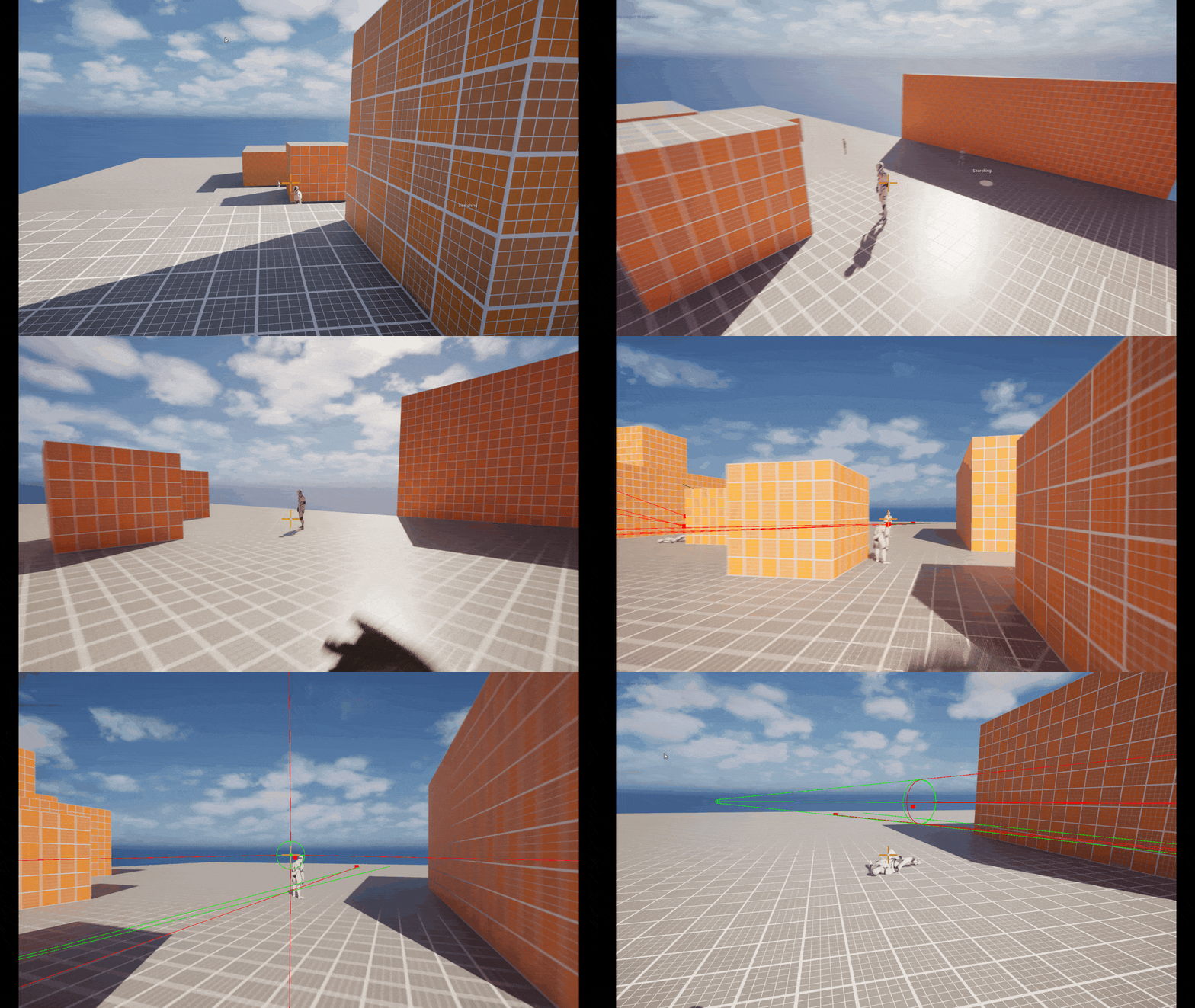
Super early prototype of core mechanics
Dash & handgun
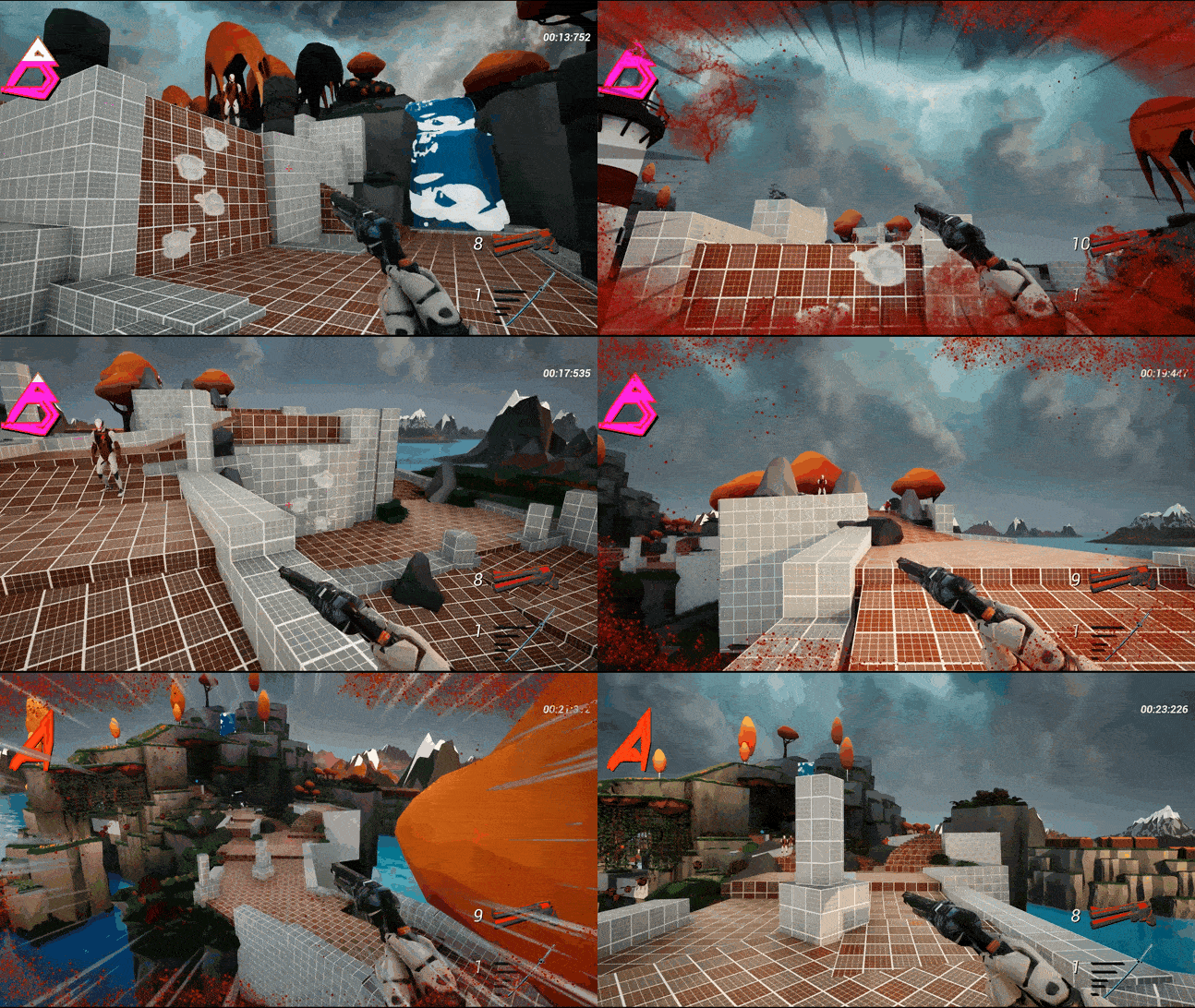
Later state
Game mechanics
I wanted to make a super digestable and easy-to-understand toolkit for the player.
The 2 core mechanics are the handgun and the sword-dash. The ultimate goal is to have a game where they both work in tandem, and complement each other for a fast and fluid gameplay experience.
The dash is set up so that the player will go in the direction of which the camera is facing, I.E. you want to go up diagonally, you look up diagonally. It makes it feel very consistent and doesn’t make it feel as if you went the unintended way, sort of how a directional input system could potentially do.
The gun works as you would expect, it fires a bullet and kills enemies in one shot, which in turn gives the player one charge of their dash.
On the other end, killing an enemy with the dash returns one dash charge as well as one bullet. I think it’s a good incentive for the player to alternate attack type for the sake of resource management. Managing your gun and dash “ammo” turned out to be a fun learning curve, and added some depth for the most optimized speedruns. If played well and no shots are missed, you can theoretically have infinite resources which I think is a fine reward for those who have mastered the toolbox.
Video where I go over the mechanics
prototyping
The name for the project, “Exceed”, actually came from a Devil May Cry mechanic where one of the protagonists can rev his sword like a motorcycle, and when fully charged would unleash a devastating attack.
The initial idea was to create that mechanic in a first person shooter, but ultimately couldn’t be balanced or feel good in combination with the rest of the players’ toolkit. The amply named “Exceed Shot” was a one shot and would penetrate all enemies that it collided with. The normal gunshot required 3 hits for a kill, but it just felt so redundant to use when the dash was also a one hit kill.
The player could also instantly reach the required amount of Exceed Revs, if they hit the Rev input 0.1 seconds after firing.
I decided to scrap the Exceed mechanic in favor of having a better feeling revolver, as well as better gameplay tempo and a more focused player arsenal. The name sounded cool though, so I kept that :)

Scrapped “Exceed” Mechanic
Gameplay systems
Besides the player mechanics available, there is the style meter as well as map timer.
The style meter is a visual representation of the player’s score, but done in a more “cool” way than simple numbers. I’m a big fan of Devil May Cry, and implementing the mechanic felt like a natural fit into a speedrunning game.
The timer works as expected, you trigger it at the start of the level and it stops at the end of the level!
Those two systems are in place to incentivize replayability in the level. It can make the player think “Oh I only got a B rank and sub-par timing?” and they want to have another go at the level. That thesis proved effective during my playtests, and also adds some nice visual flair to the game!
Reflections
This project is absolutely my most iterative one to date. The end product is severely more focused than the initial vision, for the better. All from scrapped mechanics, to the visual style, to the level layout itself.
But if I were to create more levels for this toolbox of a project, I would make levels more memorable for a more focused experience.
What I mean by that is, have some levels that are higher tempo and demands more mechanical skill, and have others that demand more analytical skill and rewards the curiosity for finding skips in the level. I think the latter approach is very cool from a level design standpoint, but I also just found it so fun to go fast in this game that I wanted to make a level that could offer both experiences.
Working on Project: Exceed has been very humbling and very eye opening for me in terms of iterative work as well as what makes a game fun and digestible.